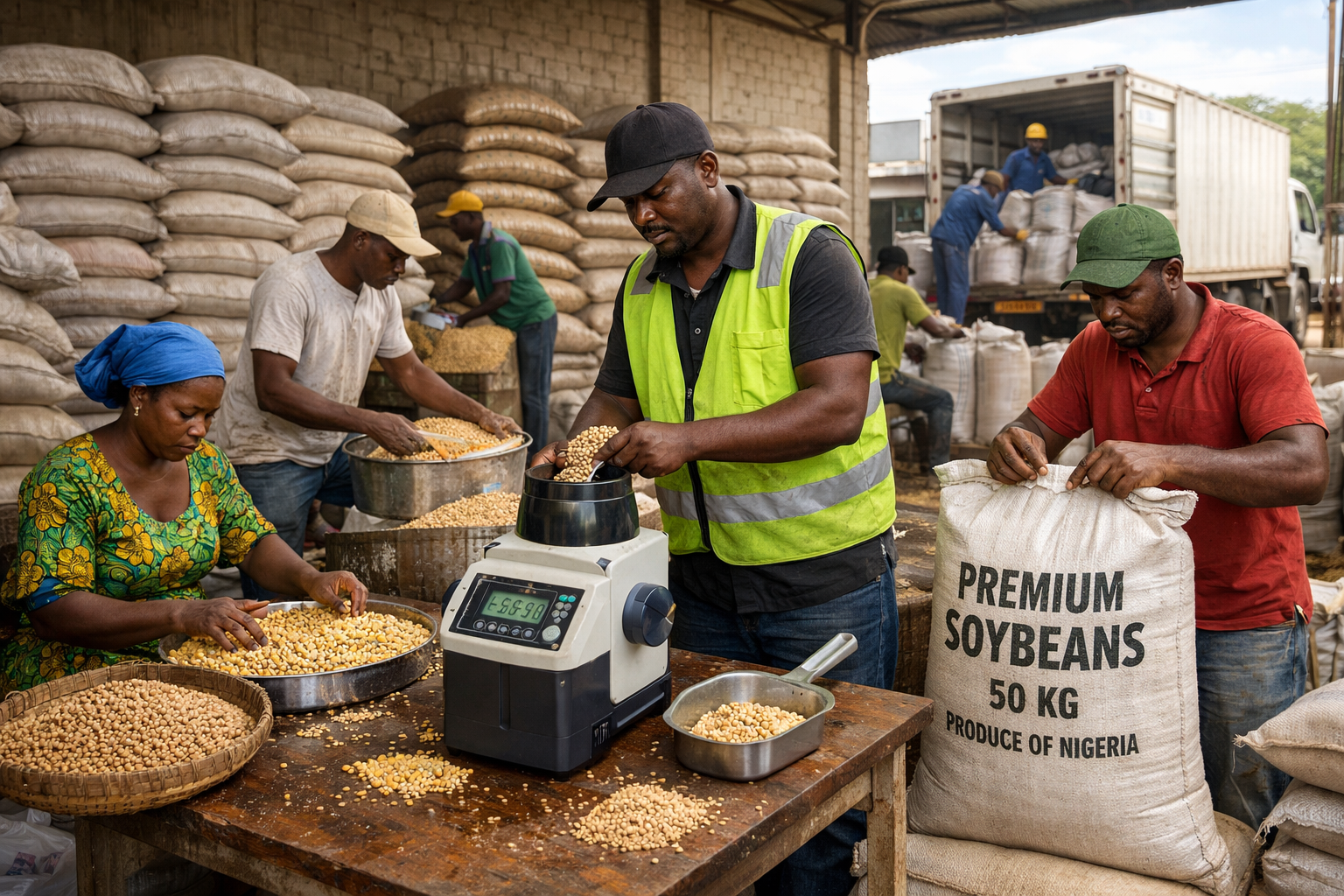
Selling to industrial buyers—such as food manufacturers, feed mills, exporters, breweries, FMCG companies, and processors—can transform a farm business from seasonal sales into predictable, high-volume revenue.
But industrial buyers are different from open-market traders. They prioritize consistency, quality, traceability, packaging, and timely delivery. If your produce is not properly prepared, it may be rejected, discounted, or fail quality checks.
For farmers, aggregators, and cooperatives, knowing how to prepare produce professionally is the key to winning repeat contracts and long-term off-take agreements.
Here’s a practical guide to getting your farm produce ready for industrial buyers.
1) Understand the Buyer’s Exact Specification
Before harvesting or packing anything, request the buyer’s product specification sheet.
Industrial buyers usually define:
- moisture content
- grade
- purity level
- acceptable defect rate
- size or nut count
- packaging type
- delivery schedule
- minimum quantity
- traceability requirements
For example:
- maize feed mills may require ≤13% moisture
- cashew buyers may specify nut count and outturn
- soybean processors may demand low foreign matter
- breweries may need uniform sorghum grain size
The clearer the spec, the lower the rejection risk. Formal markets place strong emphasis on GAP, GMP, and product compliance.

2) Harvest at the Right Maturity Stage
Harvest timing directly affects industrial quality.
Harvesting too early can cause:
- low dry matter
- poor size
- low oil content
- weak kernel recovery
- reduced shelf life
Harvesting too late can increase:
- pest damage
- mold
- contamination
- breakage
- quality deterioration
Best practice:
- follow crop maturity indicators
- avoid harvesting during rainfall
- separate damaged produce immediately
Proper maturity improves processing efficiency and buyer satisfaction.
3) Clean Thoroughly and Remove Foreign Matter
Industrial buyers want produce that is clean and machine-ready.
After harvest, remove:
- stones
- sticks
- sand
- leaves
- chaff
- damaged grains
- broken nuts
- rotten produce
Use:
- sieves
- hand sorting
- blowers
- gravity separators
- washing systems (for fresh produce)
Clean produce improves factory efficiency and reduces wear on processing equipment. Produce supplied to formal buyers must be clean, free from contamination, and fit for intended processing.
4) Dry to the Right Moisture Level
Moisture is one of the biggest reasons industrial buyers reject farm produce.
Excess moisture can lead to:
- mold growth
- aflatoxin contamination
- fermentation
- reduced storage life
- weight disputes
- lower processing yield
Recommended examples:
- maize: 12–13%
- soybean: 10–12%
- sesame: 6–8%
- cashew: buyer-specific moisture standards
Use:
- solar drying platforms
- tarpaulins
- raised drying beds
- mechanical dryers
- moisture meters
Never dry directly on bare ground.
5) Grade and Standardize the Produce
Industrial buyers need uniformity.
Grading should separate produce by:
- size
- weight
- color
- maturity
- defect rate
- purity level
For example:
- larger cashew nuts may attract better prices
- uniform maize kernels mill more efficiently
- evenly sized sesame seeds improve export value
Standardization helps buyers run smoother factory processes and improves repeat business.
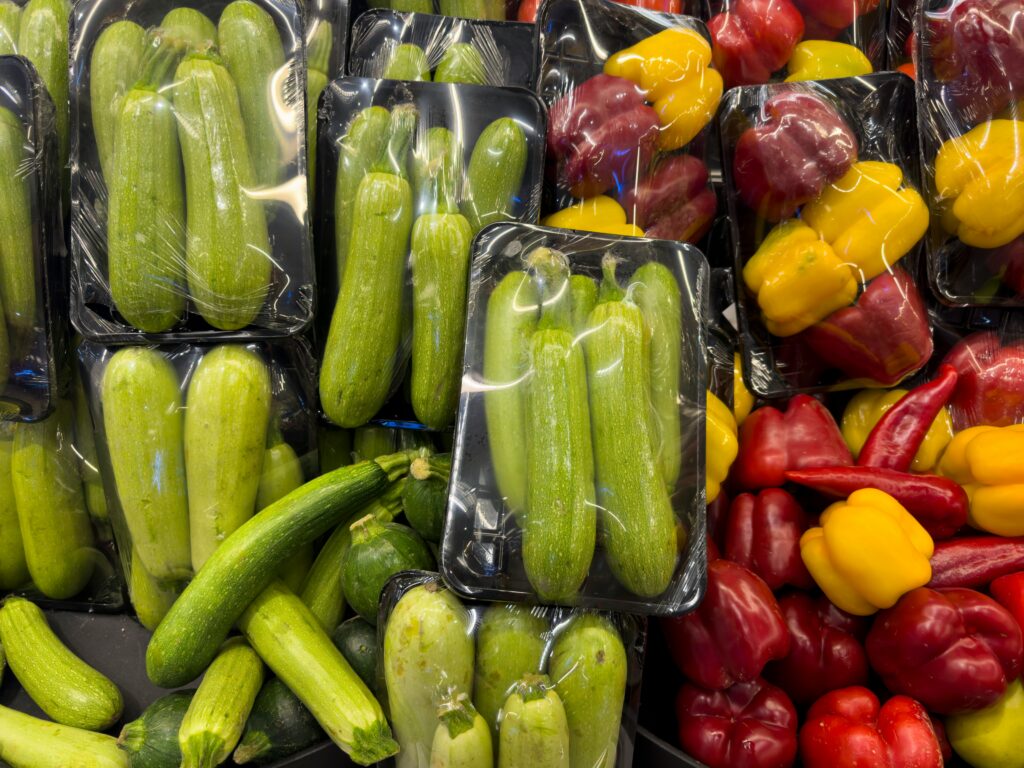
6) Use Industrial-Grade Packaging
Packaging affects both quality and perception.
Use strong, clean, standardized bags such as:
- 25kg woven sacks
- 50kg polypropylene bags
- jumbo bags for bulk contracts
- food-safe lined bags
- labeled cartons for processed goods
Your packaging should include:
- commodity name
- grade
- weight
- farm/cooperative name
- batch date
- origin location
- lot number
Proper packaging protects produce during transport and supports traceability. Packaging, labeling, and declared weights are major requirements for formal buyers.
7) Maintain Traceability Records
Modern industrial buyers increasingly need to know:
- where the produce came from
- when it was harvested
- what chemicals were used
- storage conditions
- farmer group source
- batch identity
Maintain simple records for:
- farm plot
- harvest date
- pesticide use
- drying date
- warehouse location
- transport details
Traceability is especially important for export-facing processors and regulated food manufacturers.
8) Store Properly Before Dispatch
Poor storage can destroy good produce.
Use storage spaces that are:
- dry
- well ventilated
- raised above floor level
- pest controlled
- protected from leaks
- temperature stable
Avoid:
- stacking directly on the floor
- wet warehouses
- mixed storage with chemicals
- poor fumigation practices
Good warehousing protects quality before the buyer’s truck arrives.
9) Arrange Reliable Logistics and Loading
Industrial buyers value delivery reliability as much as quality.
Before dispatch:
- confirm truck schedule
- verify loading quantity
- protect produce from rain
- use covered trucks
- avoid mixing commodities
- seal trucks where required
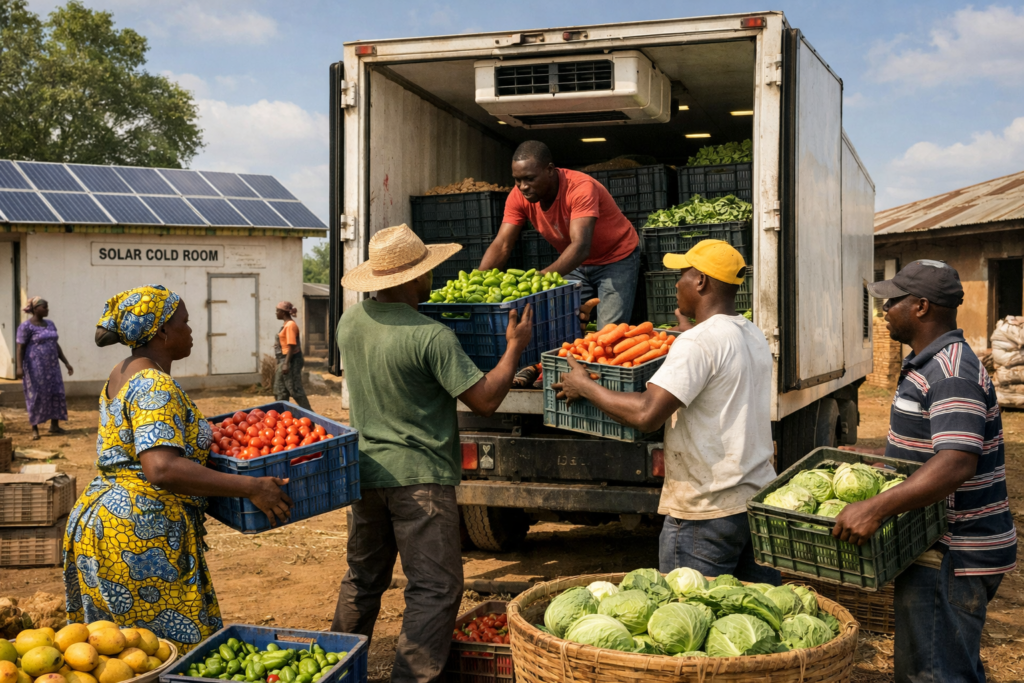
For perishables, cold-chain or insulated transport may be mandatory. Clean, protected transport is a core formal-market requirement.
Platforms like Offtakenow help streamline farm-to-factory logistics, quality assurance, and delivery coordination, reducing warehouse losses and production downtime for buyers.
10) Prepare Basic Compliance Documents
Some industrial buyers require supporting documentation such as:
- invoice
- delivery note
- quality inspection sheet
- moisture report
- lab test results
- phytosanitary certificate
- cooperative verification
- certificate of origin
For larger contracts, lab testing for:
- aflatoxin
- pesticide residue
- microbial load
- oil content
may be required.
Documentation improves trust and speeds up payment approval.
11) Be Consistent Across Every Delivery
One good batch gets attention.
Consistent quality gets contracts.
Industrial buyers prioritize suppliers who can repeatedly deliver:
- same quality
- same moisture
- same packaging
- same timeline
- same volume
This consistency leads to:
- repeat orders
- annual contracts
- higher volumes
- possible supplier financing
- stronger negotiating power
12) Work Through Cooperatives or Aggregators
If your farm cannot meet volume requirements alone, partner with:
- farmer cooperatives
- local aggregators
- warehouse operators
- digital trade platforms
Pooling supply helps meet:
- factory minimum order quantities
- export container volumes
- regular weekly demand cycles
This makes you more attractive to industrial procurement teams.
Conclusion
Preparing farm produce for industrial buyers goes far beyond harvesting. It requires quality control, drying, grading, packaging, documentation, traceability, and reliable logistics.
The farmers and aggregators who master these steps gain access to larger contracts, better pricing, and long-term buyer relationships. In Africa’s growing agro-processing economy, proper preparation is what turns farm produce into factory-ready supply.
References
- FAO. Manual for the preparation and sale of fruits and vegetables
Available at: https://www.fao.org/4/y4893e/y4893e06.htm - CBI. Buyer requirements for grains, pulses and oilseeds
Available at: https://www.cbi.eu/market-information/grains-pulses-oilseeds/buyer-requirements - Offtakenow. Farm-to-factory logistics and QA support
Available at: https://offtakenow.com/