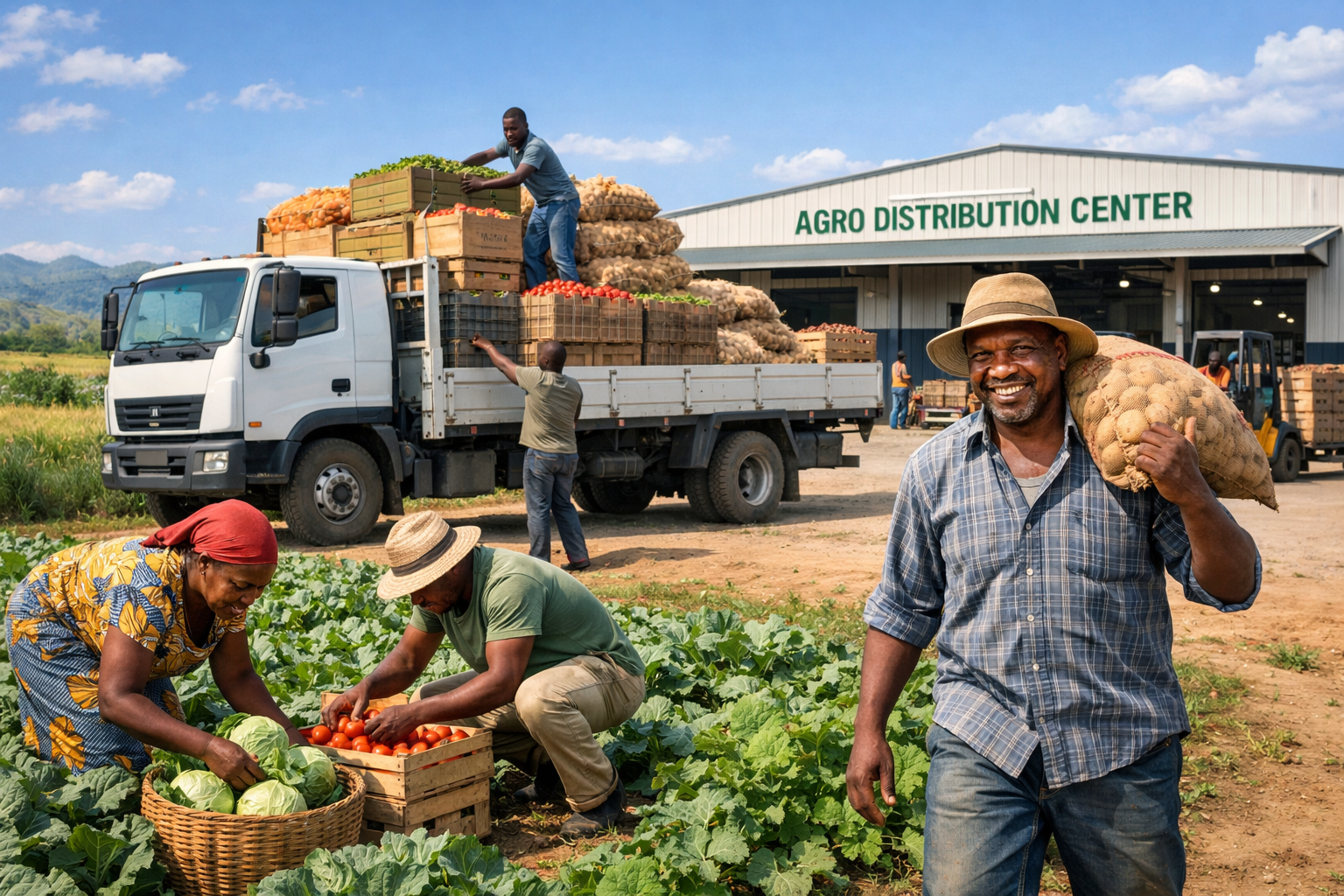
Exporting agro-commodities from Africa is one of the fastest ways for farmers, aggregators, cooperatives, and agribusinesses to scale beyond local markets. From cocoa, cashew, sesame, soybeans, ginger, and coffee to maize and shea, African produce is in strong demand across Europe, Asia, the Middle East, and North America.
For beginners, the process can seem complex because it involves market research, compliance, documentation, quality standards, logistics, and payment security.
The good news is that once you understand the steps, exporting becomes a repeatable system.
This guide breaks it down in a simple, practical way.
1) Choose the Right Commodity
Start with products that already have strong export demand.
Popular African export commodities include:
- Cocoa
- Cashew
- Sesame seeds
- Soybeans
- Ginger
- Hibiscus
- Shea butter
- Coffee
- Maize
- Palm products
Choose a commodity based on:
- consistent local supply
- strong quality control
- export demand
- storage stability
- your sourcing network
- seasonal advantage
For beginners, cashew, sesame, cocoa, and ginger are often easier because buyer demand is already established globally.
2) Research Your Target Export Market
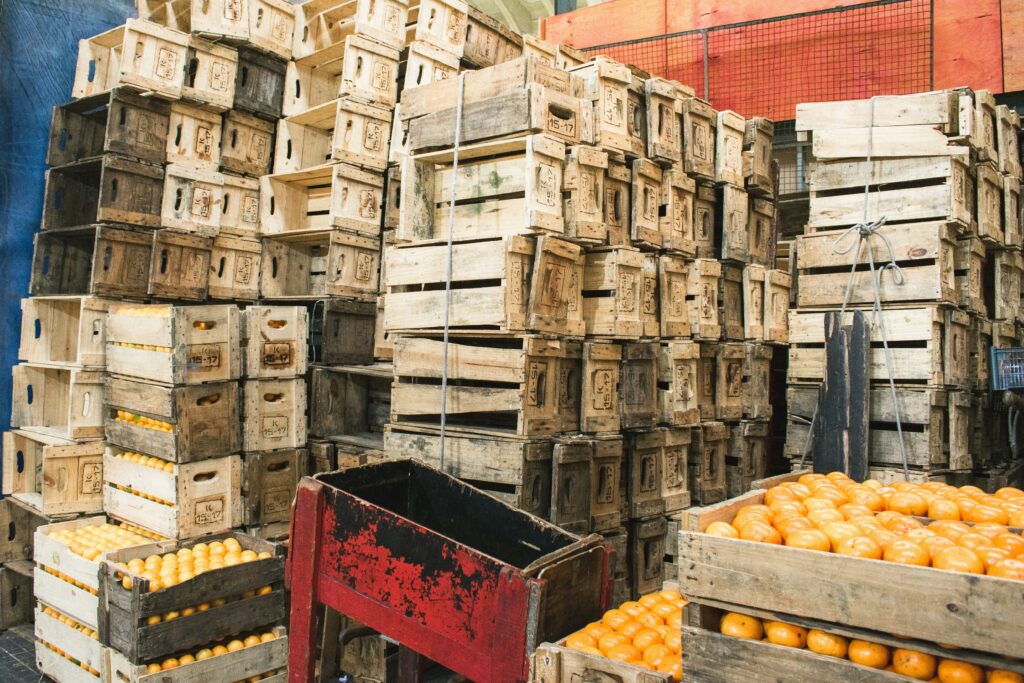
Before buying stock, identify where demand is strongest.
Examples:
- Cashew → India, Vietnam, UAE
- Cocoa → Europe, Netherlands, Germany
- Sesame → Turkey, Japan, China
- Ginger → UAE, UK, India
- Soybeans → China and regional processors
Check:
- buyer quality specs
- import restrictions
- food safety rules
- preferred packaging
- price trends
- shipping costs
A mistake beginners make is sourcing produce before understanding the buyer’s exact requirements.
3) Register Your Export Business
You need a legally registered business before shipping internationally.
Typical requirements across many African countries include:
- business registration certificate
- tax identification number
- export promotion council registration
- exporter’s license (where required)
- foreign currency business bank account
For example, in Nigeria, exporters typically register with the Nigerian Export Promotion Council (NEPC) before starting formal exports. Country-level export agencies and trade ministries usually guide this process.
4) Understand Export Documentation
Documentation is one of the most important parts of agro exports.
Common documents include:
- Commercial invoice
- Packing list
- Certificate of origin
- Phytosanitary certificate
- Quality inspection certificate
- Bill of lading
- Insurance certificate
- Export permit (for restricted goods)
Some markets may also require:
- aflatoxin lab reports
- pesticide residue tests
- fumigation certificate
- organic certification
- fair trade certification
Missing documents can delay cargo at the port or cause shipment rejection.
5) Meet International Quality Standards
Quality determines whether your shipment gets accepted.
Export buyers focus heavily on:
- moisture content
- foreign matter
- purity
- grading
- packaging
- traceability
- contamination risks
- kernel recovery or oil yield
Examples:
- Sesame must be very clean
- Cashew requires correct nut count
- Cocoa needs proper fermentation
- Maize often needs aflatoxin testing
International buyers pay premiums for consistent quality and often blacklist inconsistent suppliers.
6) Prepare Produce for Export
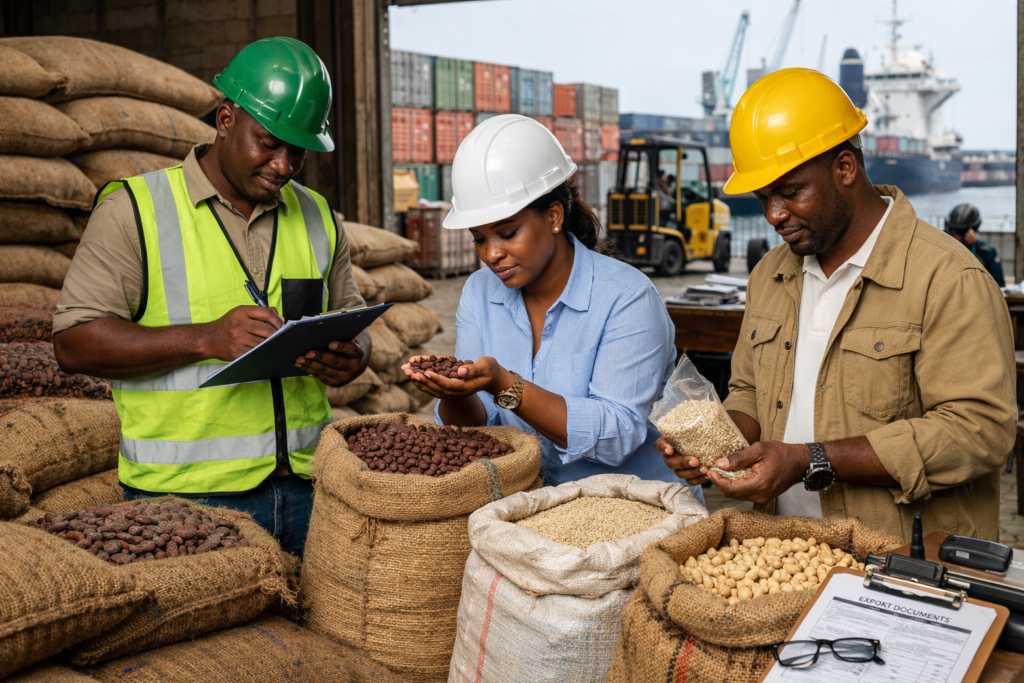
Before shipment, produce should be:
- properly dried
- cleaned thoroughly
- sorted by grade
- bagged in export-standard sacks
- palletized where required
- labeled with batch details
Use packaging suitable for sea freight such as:
- 25kg bags
- 50kg PP sacks
- jumbo bags
- vacuum packaging for processed goods
Proper post-harvest handling is what separates export-ready goods from rejected cargo. Export guides consistently stress drying, sorting, and food-grade packaging.
7) Find Verified International Buyers
Buyers can be found through:
- B2B trade platforms
- commodity brokers
- export agents
- trade fairs
- chambers of commerce
- embassies and trade desks
- LinkedIn sourcing
- direct manufacturer outreach
Digital platforms like Offtakenow also help connect suppliers to large industrial buyers and exporters.
Always verify:
- company registration
- shipment history
- website presence
- payment terms
- references
Never ship high-value cargo without proper buyer verification.
8) Understand Incoterms and Pricing
You need to know how export pricing works.
Common trade terms:
- FOB (Free on Board): you deliver to port
- CIF (Cost, Insurance, Freight): you cover freight + insurance
- EXW (Ex Works): buyer handles pickup
- DAP: delivered to buyer’s location
For beginners, FOB is often the safest starting point.
Your export price should include:
- farm gate cost
- aggregation
- warehousing
- quality testing
- trucking to port
- customs clearing
- documentation
- port charges
- margin
Poor pricing is one of the biggest reasons first-time exporters lose money.
9) Choose the Right Logistics Partner
Export success depends heavily on logistics.
Choose reliable partners for:
- inland trucking
- warehouse consolidation
- customs clearing
- freight forwarding
- shipping line booking
- port documentation
For containerized cargo, your freight forwarder helps with:
- stuffing schedule
- container sealing
- export customs
- vessel booking
- bill of lading issuance
Weak logistics can ruin good quality produce through delays, moisture exposure, or demurrage costs.
10) Secure Payment Properly
Never overlook payment security.
Safer beginner options include:
- Letter of Credit (LC)
- advance payment
- part advance + balance against documents
- escrow-backed trade platforms
Avoid:
- open credit for first shipments
- unverified agents
- vague payment promises
Payment disputes are common in international commodity trade, so always use a written contract.

11) Start With Small Trial Shipments
Do not begin with multiple containers.
A smarter approach:
- start with 1 container
- learn buyer preferences
- improve documentation flow
- test logistics timing
- measure true margins
A successful pilot shipment builds trust and leads to repeat export orders.
12) Build Long-Term Export Systems
The real profit in agro exports comes from repeat volume, not one-off shipments.
Build systems for:
- supplier consistency
- warehouse QA
- documentation templates
- buyer communication
- trade finance
- shipment tracking
- traceability
Over time, this can scale into multi-country exports.
Common Beginner Mistakes to Avoid
- buying stock before securing a buyer
- ignoring moisture and quality specs
- underpricing logistics costs
- using weak documentation
- shipping without insurance
- poor container loading
- unclear payment terms
- failing buyer due diligence
Avoiding these mistakes protects margins and reputation.
Conclusion
Exporting agro-commodities from Africa is one of the most scalable opportunities in modern agricultural trade. With the right commodity choice, buyer research, compliance, quality control, documentation, and logistics, even beginners can build profitable export operations.
Start small, master the process, and focus on consistency.
That is how successful agro exporters grow from one container to long-term international contracts.
References
- Exporting Agricultural Products from Africa: Step-by-Step Guide
Available at: https://ahargroup.com/exporting-agricultural-products-from-africa/ - Guide to Exporting From Africa
Available at: https://www.usafricatrade.org/guide-to-exporting-from-africa/ - How to Get Export Certification and Documentation for Nigerian Agro Products
Available at: https://www.comilmart.com/how-to-get-export-certification-and-documentation-for-nigerian-agro-products/