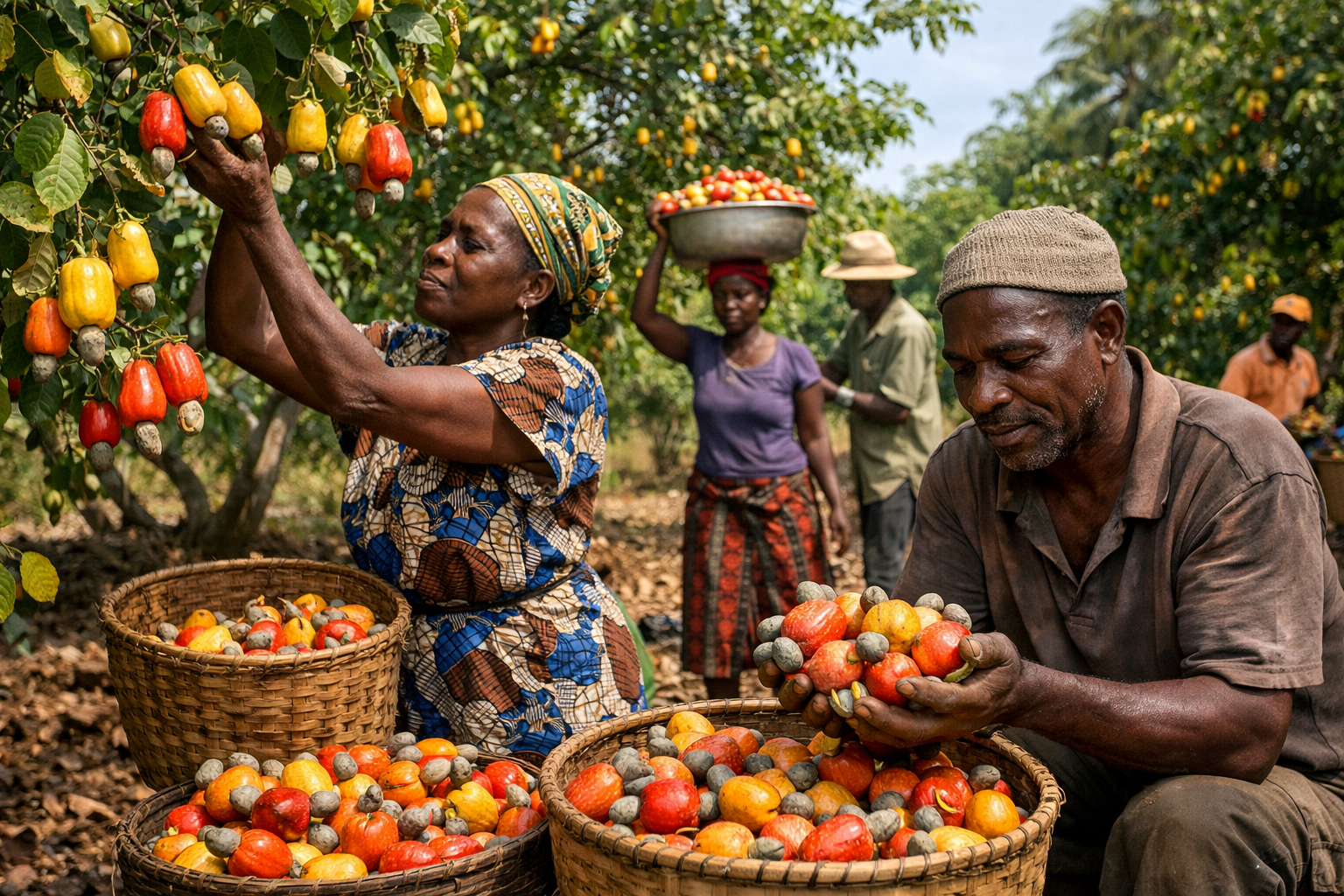
Cashew has become one of Africa’s most valuable agricultural exports. Across West and East Africa, thousands of farmers rely on cashew as a primary source of income, while exporters, aggregators, and processors see it as a high-demand commodity in global markets.
With strong international demand, relatively low production costs, and increasing processing opportunities, cashew continues to stand out as one of the continent’s most profitable cash crops.
In this article, we explore why cashew is so profitable, the factors driving demand, and how farmers and traders can maximize returns during the season.
1. Strong Global Demand for Cashew
Cashew consumption has grown steadily over the past decade. The nuts are widely used in:
- Snack foods
- Plant-based milk production
- Confectionery and bakery products
- Vegan and health-conscious diets
- Nut butters and spreads
Major importing regions include Europe, the United States, India, Vietnam, and China. As global health awareness increases, demand for plant-based protein and nutrient-rich snacks continues to rise.
According to the Food and Agriculture Organization, global tree nut consumption has consistently increased due to changing dietary patterns and urbanization. Cashew benefits directly from this trend.
2. Africa Is a Leading Producer
Africa accounts for a significant share of global raw cashew nut production. Countries such as:
- Nigeria
- Ivory Coast
- Ghana
- Benin
- Tanzania
are among the top producers globally.
For example, Ivory Coast is currently the world’s largest producer of raw cashew nuts, while Nigeria remains one of the top exporters in West Africa. This strong production base gives African farmers a competitive advantage in global trade.
3. High Export Value
Cashew is primarily exported as:
- Raw Cashew Nuts (RCN)
- Cashew kernels (processed nuts)
Export prices fluctuate each season depending on global supply and demand, but cashew remains one of the higher-value export commodities compared to many staple crops.
The World Bank notes that non-oil agricultural exports, including cashew, play a crucial role in diversifying African economies and boosting foreign exchange earnings.
For many farmers, a single cashew season can generate more income than multiple harvest cycles of staple crops.
4. Relatively Low Maintenance Crop
Cashew trees are hardy and adaptable to tropical climates. Once established, they:
- Require moderate maintenance
- Are drought-tolerant
- Produce for many years (up to 25–30 years)
- Have lower input costs compared to some cash crops
This makes cashew attractive for smallholder farmers who may not have access to intensive farming inputs.
Because the trees produce annually, farmers benefit from recurring income during each harvest season.
5. Growing Local Processing Opportunities
Historically, most African countries exported raw cashew nuts to Asia for processing. However, local processing is increasing across West Africa.
Processing adds value through:
- Shelling
- Roasting
- Grading
- Packaging
Countries like Ivory Coast and Ghana are investing heavily in local processing plants to retain more value domestically. Local processing creates:
- Employment opportunities
- Higher export margins
- Stronger industrial development
Value addition significantly increases profitability compared to exporting raw nuts.
6. Multiple Revenue Streams
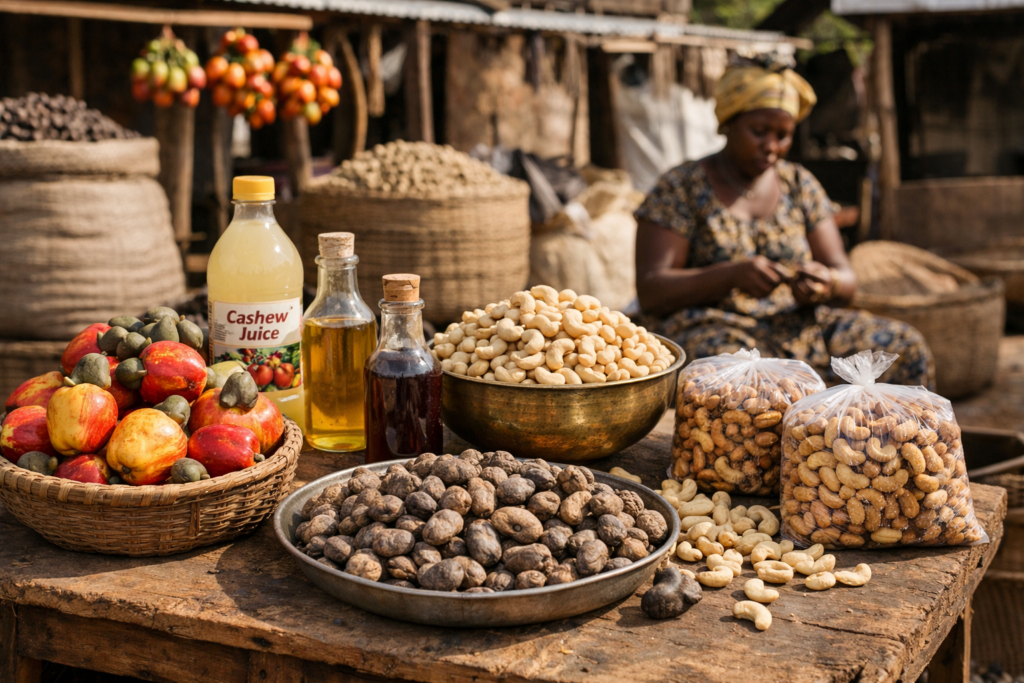
Cashew offers more than just nut sales. Farmers and processors can generate income from:
- Cashew kernels
- Cashew apple juice
- Cashew nut shell liquid (CNSL), used in industrial products
- Animal feed from by-products
The cashew apple, often underutilized, can be processed into juice, jam, or alcohol-based products, opening additional income streams.

7. Rising Demand for Traceability and Quality
International buyers increasingly require:
- Moisture-controlled nuts
- Proper grading
- Quality packaging
- Traceability documentation
Farmers and aggregators who meet export standards often command premium prices. Digital marketplaces and structured trade platforms help improve compliance and connect suppliers directly to verified buyers.
8. Profitability Compared to Other Crops
Compared to crops such as maize or cassava, cashew generally offers:
- Higher export pricing
- Lower perishability
- Stronger international demand
- Easier storage (when properly dried)
While food crops are essential for food security, cashew remains one of the most commercially viable export-oriented crops for income generation.
9. Seasonal Price Advantage
Cashew season creates a window of opportunity. During peak harvest:
- Supply increases
- Aggregators compete for volume
- Export contracts are negotiated
Farmers who understand timing, quality control, and storage strategies can maximize profits by selling strategically instead of rushing into early-season low prices.
10. Government and Institutional Support
Several African governments promote cashew production through:
- Improved seedlings
- Farmer training programs
- Export incentives
- Processing subsidies
Development institutions also support cashew value chain expansion as part of agricultural diversification strategies.

Conclusion
Cashew remains one of Africa’s most profitable cash crops due to strong global demand, high export value, relatively low production costs, and growing processing opportunities. For farmers, aggregators, and exporters, cashew season represents a powerful income opportunity.
With improved quality standards, better market access, and increasing digital trade platforms, the profitability of cashew is expected to continue rising across Africa.
As global demand grows, Africa’s cashew sector is well-positioned to play a major role in international agricultural trade.
References
- Food and Agriculture Organization (FAO). Tree Nut Production Data.
Available at: https://www.fao.org - World Bank. Agricultural Export Diversification in Africa.
Available at: https://www.worldbank.org - International Trade Centre. Cashew Market Analysis Reports.
Available at: https://www.intracen.org