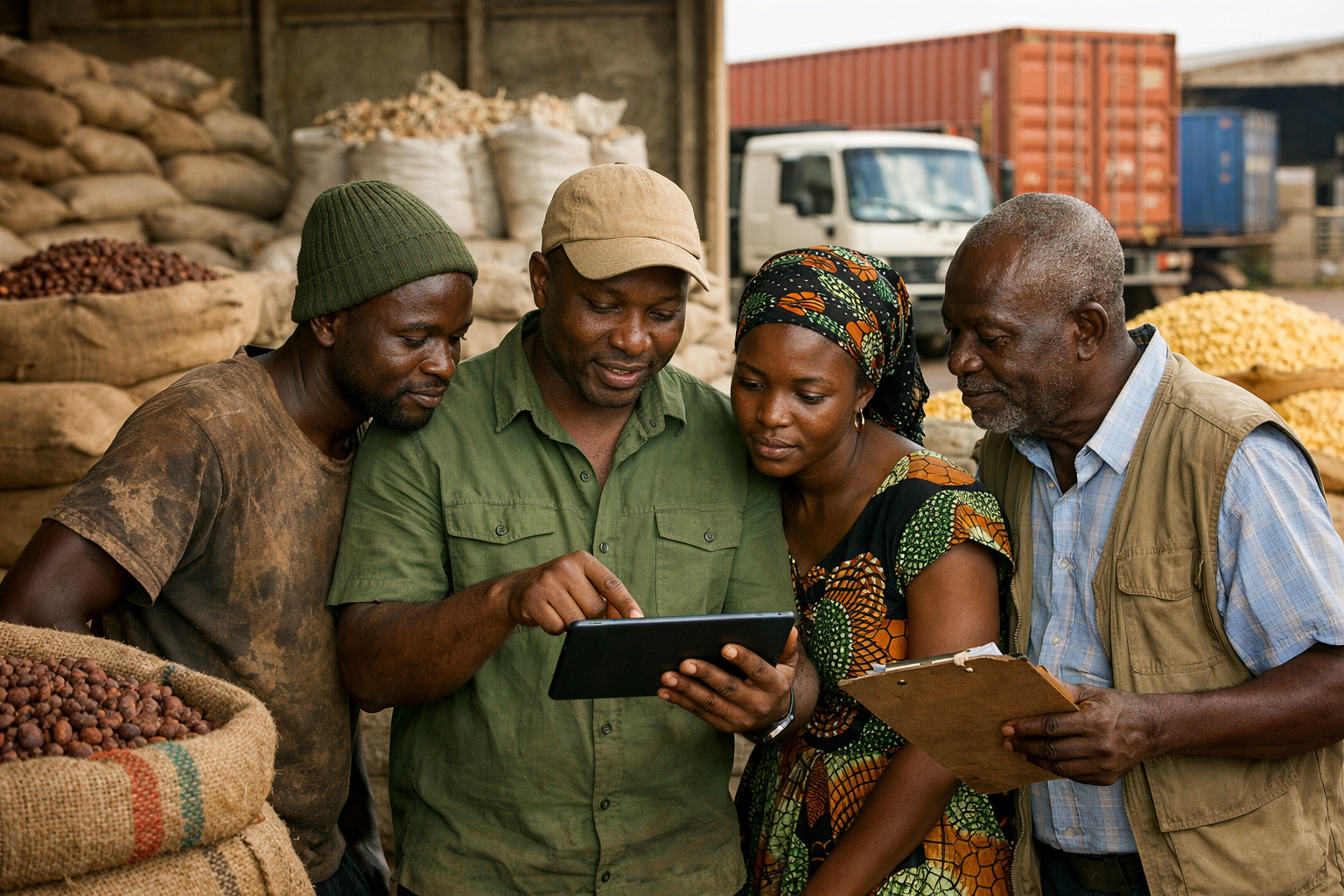
Agro-commodity prices are never random. Whether it is cocoa in Nigeria, cashew in Ghana, sesame in Sudan, or maize in Kenya, prices move based on a combination of production realities, logistics, demand, policy, and global market conditions.
For farmers, aggregators, processors, exporters, and digital trade platforms, understanding what drives pricing is critical for making profitable buying and selling decisions.
In this guide, we break down the major factors that influence agro-commodity costs across Africa and why prices can change so quickly from one season to another.
1) Supply and Harvest Volumes
The most basic driver of price is supply.
When harvest volumes are strong, commodity prices tend to soften because more product is available in the market. When drought, pests, flooding, or poor yields reduce harvests, prices usually rise.
For example:
- A bumper maize harvest in East Africa can push prices down
- Lower cocoa yields in West Africa can drive export prices up
- Reduced cashew harvests can increase competition among exporters
The World Bank expects broad agricultural prices to remain mostly stable in 2026, but extreme weather remains one of the biggest upside risks to commodity prices.
2) Weather and Climate Conditions
Across Africa, agriculture remains heavily dependent on rainfall patterns.
This means pricing is strongly affected by:
- Droughts
- Flooding
- Irregular rainfall
- Heat stress
- Pest outbreaks linked to weather
A single delayed rainy season can reduce output in major producing belts, leading to regional price spikes.
Climate volatility is now one of the strongest price drivers for:
- Cocoa
- Cashew
- Maize
- Rice
- Soybeans
- Coffee
As climate uncertainty increases, commodity prices become more volatile.
3) Logistics and Transportation Costs
One of the most underestimated pricing factors in Africa is logistics cost.
Moving agro-commodities from farms to warehouses, factories, ports, or export terminals involves:
- Rural transportation
- Highway freight
- Fuel
- Warehousing
- Port handling
- Cross-border customs
Poor roads, fuel price increases, and shipping bottlenecks all increase the landed cost of commodities.
For example, a truck delay from northern Nigeria to Lagos can raise the effective market price of maize or sesame simply because transport costs rise.
Recent logistics bottlenecks globally have directly contributed to commodity volatility through higher freight rates and corridor pressure.
4) Input Costs for Farmers
The cost of production directly influences the minimum profitable selling price.
Key farm input costs include:
- Seeds
- Fertilizer
- Herbicides
- Labor
- Diesel
- Irrigation
- Machinery maintenance
When fertilizer prices rise, farmers demand better selling prices to maintain margins.
This is especially important for export commodities where global prices may not rise as fast as local production costs.
Higher natural gas and energy costs also affect fertilizer pricing, creating ripple effects across the commodity chain.

5) Export Demand and Global Buyers
Many African agro-commodities are export-driven.
Examples include:
- Cocoa → Europe and North America
- Cashew → India and Vietnam
- Sesame → Middle East and Asia
- Coffee → Europe and global specialty markets
When international demand rises, local prices increase because exporters compete aggressively for volume.
If global demand slows, local prices can weaken even during a strong harvest.
This is why traders monitor:
- Global futures markets
- Export contracts
- Buyer demand cycles
- Currency trends in destination countries
6) Currency Exchange Rates
Exchange rates are one of the most important price drivers in Africa.
Most export commodities are priced in US dollars, while farmers and local traders operate in local currencies.
A weaker Nigerian Naira often means exporters can pay more in local currency terms, even if the dollar commodity price remains unchanged.
This creates price movements driven purely by forex changes rather than actual supply.
Currency risk strongly affects:
- Export margins
- Import costs for farm inputs
- Trade financing
- Cross-border commodity competitiveness
7) Government Policies and Trade Rules
Government interventions can significantly affect pricing.
Examples include:
- Export restrictions
- Tariffs
- Commodity reserve releases
- Subsidies
- FX policies
- Border closures
- Import waivers
A sudden export ban on maize or rice in one country can immediately tighten supply and raise prices across neighboring markets.
Regional agreements like AfCFTA may reduce some of these pricing distortions over time by easing trade barriers.
8) Commodity Quality and Grade
Not all agro-commodities are priced equally.
Quality differences strongly influence final market value.
For example, cashew prices may vary based on:
- Nut count
- Moisture content
- Foreign matter
- Kernel recovery ratio
- Packaging quality
Similarly, cocoa premiums depend on bean size, fermentation quality, and traceability standards.
Higher grades command stronger pricing and export demand.

9) Storage and Timing of Sale
Timing can be just as important as harvest volume.
Immediately after harvest, prices often dip because supply floods the market.
Farmers and aggregators with access to good storage can wait for:
- Lean season price increases
- Better export contracts
- Improved buyer demand
- Reduced transport congestion
This creates better margins compared to panic selling.
Proper warehousing and financing allow sellers to optimize timing instead of accepting the first available price.
10) Market Information and Digital Transparency
One of the biggest reasons for pricing inefficiencies in Africa is limited market information.
Farmers without access to:
- regional prices
- export demand data
- buyer competition
- logistics cost benchmarks
often sell below fair value.
Digital trade platforms are improving transparency through:
- real-time price discovery
- direct buyer competition
- verified contracts
- structured logistics support
Platforms like Offtakenow help reduce price opacity and improve decision-making for suppliers and buyers.
Why Pricing Knowledge Matters
Understanding agro-commodity pricing helps stakeholders:
- negotiate better deals
- choose the right time to sell
- improve profit margins
- manage supply chain risk
- plan financing needs
- optimize export competitiveness
Pricing intelligence is no longer optional in modern agricultural trade.
It is now a competitive advantage.
Conclusion
Agro-commodity pricing across Africa is influenced by a complex mix of supply, weather, logistics, production costs, global demand, exchange rates, and policy decisions.
The traders, farmers, processors, and exporters who understand these drivers are better positioned to maximize margins and reduce risk.
As African agricultural markets become more digital, connected, and export-oriented, pricing transparency will become even more important in building efficient and profitable supply chains.
References
Farmonaut. Agri commodity prices 2026: key trends.
Available at: https://farmonaut.com/blogs/agri-commodity-prices-2026-key-ag-commodities-trends
World Bank. Global agricultural markets in 2026: stabilizing prices, persisting risks.
Available at: https://blogs.worldbank.org/en/developmenttalk/global-agricultural-markets-in-2026–stabilizing-prices–persist
SeaRates. How logistics bottlenecks drive commodity price volatility.
Available at: https://www.searates.com/jp/blog/post/commodity-trade-in-2026-how-logistics-bottlenecks-drive-price-volatility