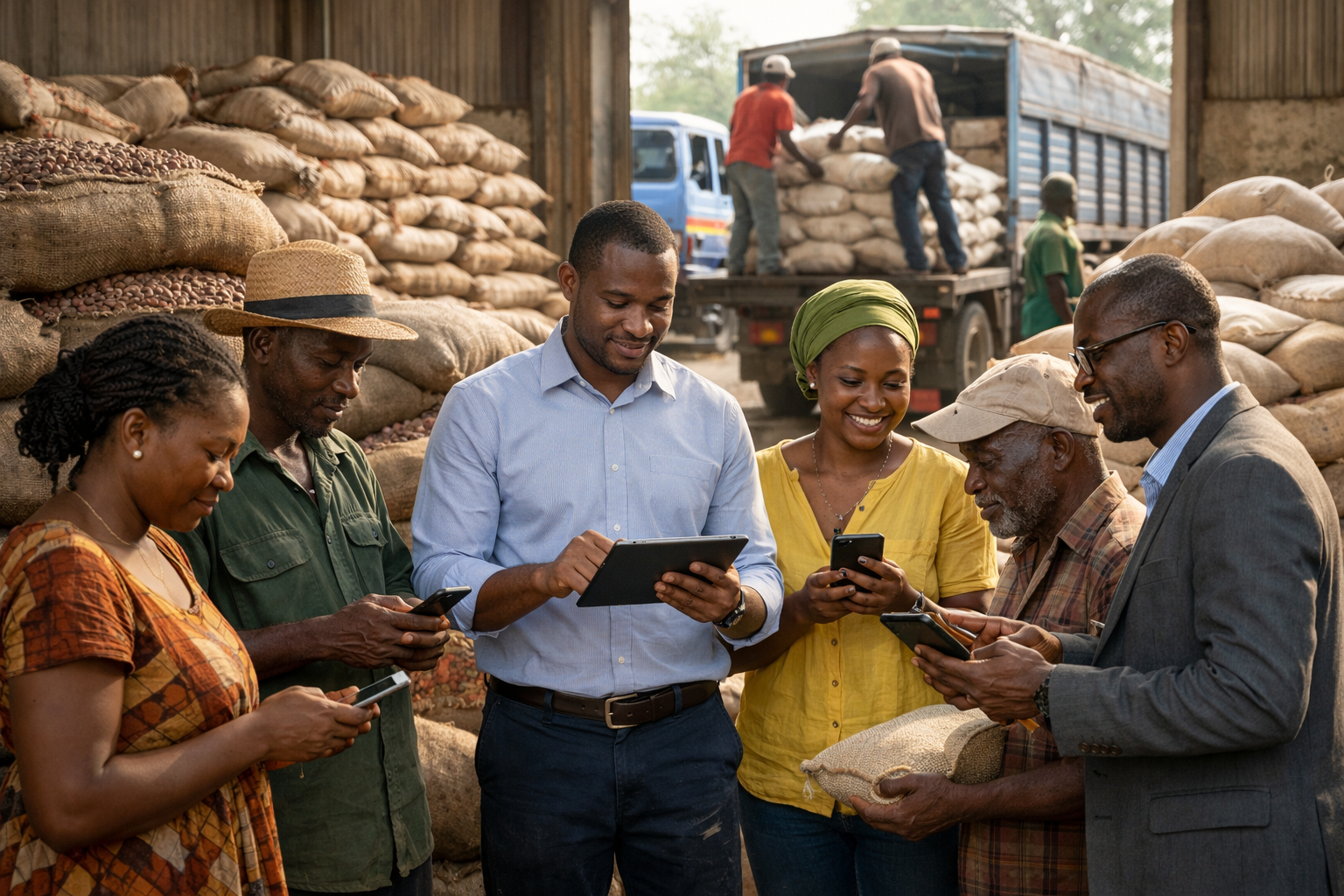
Africa’s agricultural sector is undergoing a major transformation. Traditionally, agro-commodity trading relied on informal networks of farmers, middlemen, and local traders. While this system supported millions of livelihoods, it often lacked transparency, financing access, and efficient logistics.
Today, technological innovation, regional trade integration, and investment in agro-processing are reshaping the future of agricultural trade across the continent. From digital marketplaces and mobile payments to improved logistics and processing hubs, Africa’s agro-commodity sector is evolving rapidly.
Understanding these trends is crucial for farmers, traders, exporters, and manufacturers looking to participate in the next phase of Africa’s agricultural economy.
The Growing Importance of Agro-Commodity Trade
Agriculture remains one of Africa’s most important economic sectors. Millions of people depend on agricultural production, trading, and processing for income and employment.
Commodities such as:
- Cocoa
- Cashew
- Coffee
- Maize
- Soybeans
- Sesame seeds
- Palm oil
are traded across domestic and international markets. These commodities supply global food industries, manufacturing sectors, and export markets.
With rising global demand for food, plant-based proteins, and natural ingredients, Africa’s agricultural exports are expected to grow significantly in the coming decades.

Digital Platforms Are Transforming Agricultural Trade
One of the biggest changes in agro-commodity trading is the rise of digital marketplaces and technology platforms.
Mobile platforms now connect farmers directly with buyers, reducing reliance on traditional intermediaries and improving price transparency. Farmers can access real-time market data, list commodities online, and negotiate trade agreements more efficiently.
Digital technologies also enable:
- Online commodity marketplaces
- Electronic payment systems
- Digital contracts and trade documentation
- Supply chain tracking and traceability
These tools make agricultural trading faster, more transparent, and more accessible for smallholder farmers.
In many African countries, mobile-based platforms are helping farmers enter formal supply chains for the first time.
The Rise of Agritech and Smart Farming
Agritech innovations are playing a crucial role in the future of agro-commodity trading. Technologies such as satellite monitoring, data analytics, and Internet of Things (IoT) devices help farmers monitor crop health, weather conditions, and soil quality.
These tools allow farmers to improve productivity and reduce risks associated with pests, droughts, or poor crop management.
Digital farming solutions also help:
- Predict harvest volumes
- Improve crop quality
- Reduce post-harvest losses
- Improve supply chain coordination
As digital agriculture expands, experts estimate that a majority of African agribusinesses could adopt digital tools for production and supply chain management within the next few years.
Expansion of Agro-Processing and Value Addition
Another major trend shaping the future of agro-commodity trading is the expansion of local processing industries.
For many years, Africa exported large volumes of raw agricultural commodities while importing processed food products. This limited the economic value retained within producing countries.
Today, governments and development institutions are investing heavily in agro-processing infrastructure.
For example, major investments are being directed toward special agro-industrial processing zones designed to bring food processing facilities closer to farming communities. These initiatives aim to reduce post-harvest losses, strengthen value chains, and create jobs across agricultural sectors.
Processing commodities locally—such as turning cocoa into chocolate or cashew nuts into packaged kernels—significantly increases export value and profitability.

Regional Trade Integration Through AfCFTA
The African Continental Free Trade Area (AfCFTA) is expected to reshape agricultural trade within Africa.
By reducing tariffs and harmonizing trade regulations across countries, AfCFTA creates a larger and more integrated market for agricultural commodities.
This regional integration will allow producers and traders to:
- Access larger cross-border markets
- Expand agricultural exports within Africa
- Reduce trade barriers and transport costs
- Encourage investment in logistics infrastructure
Greater regional trade could significantly boost the competitiveness of African agricultural products in global markets.
Supply Chain Transparency and Traceability
Global buyers increasingly demand traceability and transparency in agricultural supply chains.
Consumers and regulators want to know where products come from, how they were produced, and whether they meet environmental and safety standards.
Technologies such as blockchain, QR codes, and digital tracking systems are helping companies track agricultural products from farm to factory.
These systems help ensure:
- Product authenticity
- Food safety compliance
- Ethical sourcing standards
- Improved trust between buyers and suppliers
Traceability systems also help African exporters meet strict requirements in European and international markets.
Financing and Investment Opportunities
Access to financing has long been a challenge for farmers and agricultural traders. Many smallholder farmers lack collateral or formal credit histories, making it difficult to obtain loans from traditional banks.
Fintech solutions and digital lending platforms are helping bridge this gap.
By using digital transaction records and farm data, lenders can evaluate credit risk more accurately and extend micro-loans to farmers and agribusinesses.
These financing innovations support:
- Farm expansion
- Commodity aggregation
- Trade financing
- Investment in storage and logistics
Increased financing access will play a key role in scaling Africa’s agricultural trade sector.
Logistics and Infrastructure Development
Efficient logistics are essential for the future of agro-commodity trading. Poor roads, limited storage facilities, and inefficient transport systems often cause delays and product losses.
Investment in logistics infrastructure—such as rural roads, cold storage facilities, and commodity warehouses—is improving supply chain efficiency across the continent.
Improved logistics help:
- Reduce post-harvest losses
- Improve delivery times
- Maintain commodity quality
- Lower transportation costs
Better infrastructure will allow African producers to compete more effectively in global markets.

Climate Challenges and Supply Chain Resilience
While the future of agro-commodity trading looks promising, climate risks and global supply disruptions remain major challenges.
Recent global events have shown how geopolitical tensions and supply chain disruptions can affect agricultural inputs such as fertilizer and fuel. These disruptions can increase production costs and food prices in many African countries.
To address these challenges, African countries are investing in:
- Climate-smart agriculture
- Local fertilizer production
- Improved irrigation systems
- Resilient agricultural supply chains
Strengthening resilience will be critical to sustaining long-term agricultural growth.
Opportunities for Farmers and Agribusinesses
The transformation of agro-commodity trading presents several opportunities for stakeholders across the value chain.
Farmers can benefit from:
- Improved market access
- Higher price transparency
- Digital farming tools
- Better financing options
Agribusiness companies and traders can benefit from:
- Expanded export markets
- Increased demand for value-added products
- Technology-driven supply chain management
- New investment opportunities in processing and logistics
As the sector modernizes, those who adopt digital tools and efficient supply chain practices will gain a competitive advantage.
Conclusion
The future of agro-commodity trading in Africa is being shaped by technology, investment, and regional trade integration. Digital platforms, agritech innovations, improved logistics, and expanded processing industries are transforming how agricultural commodities are produced, traded, and exported.
While challenges remain, Africa’s agricultural sector holds enormous potential. With the right infrastructure, policies, and technological adoption, agro-commodity trading could become one of the most powerful drivers of economic growth across the continent.
As Africa continues to modernize its agricultural systems, the transition from traditional trade networks to digitally connected supply chains will unlock new opportunities for farmers, traders, processors, and global buyers.
References
- Agribusiness Sector Trends in Africa
https://farmonaut.com/africa/agribusiness-sector-trends-africa-industry-shifts-2026 - Agritech Is Transforming Africa’s Economy and Financial Future
https://furtherafrica.com/2025/11/11/agritech-is-transforming-africas-economy-and-financial-future/ - Digital Platforms Are Changing the Way Africa Sells Its Harvest
https://primeprogressng.com/perspective/digital-platforms-are-changing-the-way-africa-sells-its-harvest/ - Digital Transformation in African Agribusiness
https://agritechdigest.com/digital-transformation-in-african-agribusiness/